· Hussaini IT Services · 3 min read
How Long Should a Business Website Really Take to Build?
For most small-to-medium business websites, a realistic timeline is 2 to 6 weeks from kickoff to launch. A simple 4-5 page brochure site might take as little as 1-2 weeks. A more complex site with custom features, integrations, or e-commerce functionality can take 6-12 weeks or longer. If someone promises you a fully custom, production-ready website in 48 hours, that's usually a template with your logo dropped in — not a website built around your business.
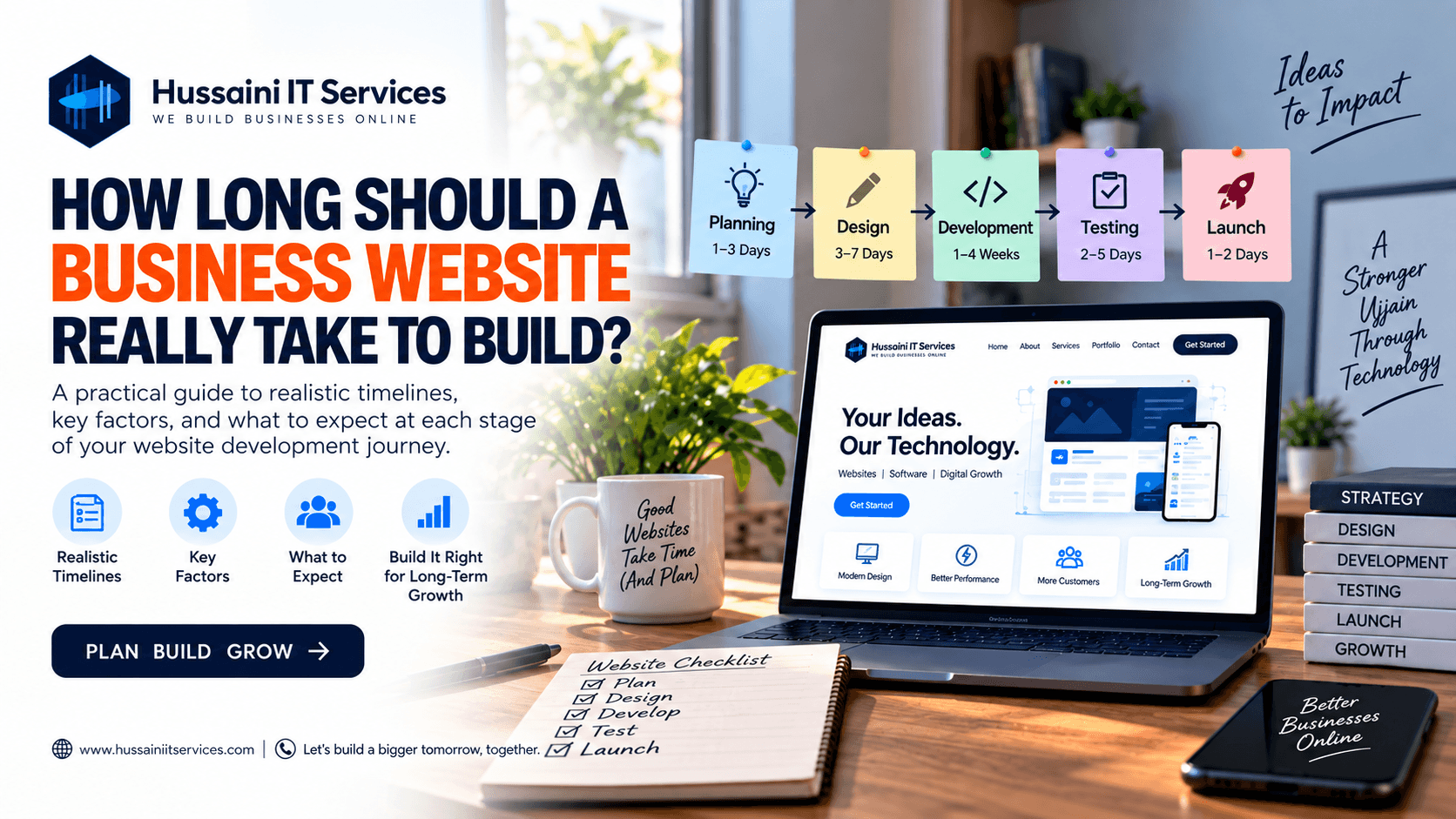
How Long Does It Take to Build a Website?
There’s no single timeline for every website. The actual development time depends on the scope, complexity, content, design, revisions, and integrations involved.
What Actually Determines the Timeline?
1. Scope & Complexity
A simple informational website with pages like About, Services, and Contact is very different from a platform with booking systems, user accounts, payments, or a custom CRM.
More features mean more time because each component needs to be built, tested, and properly integrated.
2. Content Readiness
One of the biggest factors is having your copy, images, logo, and branding ready from the beginning.
If content is delayed during development, the overall timeline will naturally increase.
3. Number of Revision Rounds
Every round of feedback and revisions adds time. Revisions are important to ensure the final website represents your business correctly, but they should be included in the project timeline from the start.
4. Design & Development Approach
A custom website designed around your brand generally takes longer than using an existing template.
Similarly, technologies such as React or Next.js may require more development time upfront than no-code platforms, but can provide better performance, flexibility, and scalability.
5. Integrations & Third-Party Tools
Integrations such as:
- Payment gateways
- Booking systems
- CRM platforms
- WhatsApp or live chat
- Email marketing tools
- Analytics platforms
can add additional development, testing, and troubleshooting time.
A Realistic Timeline
| Website Type | Typical Timeline |
|---|---|
| Simple brochure site (3–5 pages) | 1–3 weeks |
| Business website with custom features | 3–6 weeks |
| E-commerce website | 4–8 weeks |
| Custom web app / CRM-integrated platform | 8–16+ weeks |
Note: These are general estimates. Actual timelines depend on the specific requirements and project scope.
Why "Fast" Isn't Always "Good"
Launching quickly can be tempting, but rushing a website can lead to:
- Poorly thought-out content and design decisions
- Insufficient testing across devices and browsers
- Weak SEO fundamentals
- Performance and usability issues
- A website that needs to be rebuilt within a year
Your website is often one of the first interactions a potential customer has with your business. Taking a little more time to build it properly is usually better than rushing and having to rebuild it later.
How to Keep Your Project on Track
If you want your website completed efficiently without cutting corners, you can help by:
- Having your content, images, logo, and branding ready before development begins.
- Providing clear and consolidated feedback.
- Finalizing must-have features before development starts.
- Avoiding major feature additions midway through the project.
- Choosing a development partner who provides a realistic timeline.
The Bottom Line
There is no universal answer to "How long should my website take?"
What matters is having the right process.
A good development agency should:
- Properly understand your requirements
- Define the project scope
- Provide a realistic timeline
- Communicate clearly throughout development
- Explain any changes to the timeline
If a timeline sounds too good to be true, ask what is being compromised to achieve it.
Build It Right, Not Just Fast
Looking to build a website that's designed around your business—not just launched quickly?
Get in touch and we'll provide a realistic timeline based on what your business actually needs.
More articles
View all
· Hussain Mesharwala · 10 min read
How to Get More Customers from Google in Dubai: A Complete Local SEO Guide for Businesses
Learn how Dubai businesses can improve Google visibility, attract local customers, optimize Google Business Profile, and generate more qualified leads with Local SEO.
Read article →
· Adam Pithenwala · 12 min read
How Much Does a Website Cost in Ujjain in 2026? Complete Pricing Guide
Wondering how much a website costs in Ujjain? Explore the 2026 pricing guide for business websites, ecommerce stores, custom web applications, and more.
Read article →
· Adam Pithenwala · 9 min read
Why Every Business in Ujjain Needs an Online Presence Before Simhastha 2028
Simhastha 2028 will bring millions of visitors to Ujjain. For local businesses, being online can mean the difference between being discovered by new customers and being i…
Read article →Want this done for your business?
We build the websites, SEO, and campaigns we write about — from Ujjain and Dubai.